


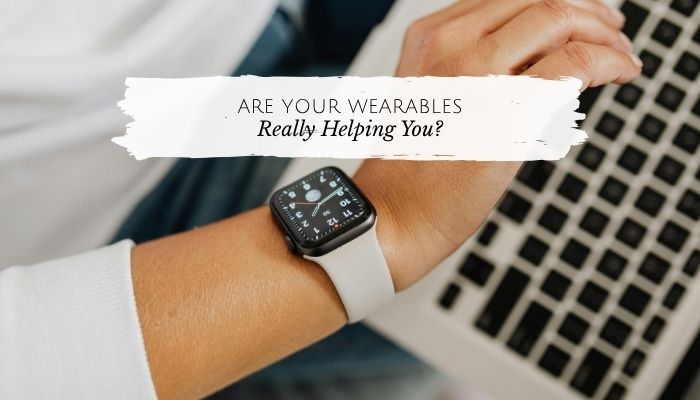
01 Sep Apple Watch, Oura, Fitbit… Are Health Trackers Really Helping You?
Apple Watch, Fitbit, Oura, Hume… there are so many options now that it can be hard to know what you actually need.
I was part of a panel last week discussing wearables, as more people are using technology to track their health.
A first question to consider:
Do you actually use the information your wearable gives you?
If seeing your steps motivates you to get outside and move more, great. If looking at your sleep helps you recognize that you need to get to bed earlier, that’s useful too.
But sometimes we might be collecting more information than we really know what to do with.
Your watch can tell you how many hours you slept, your heart rate, your activity level and all kinds of other things. But it can’t always tell you how you actually feel.
And that’s important.
The numbers are information. They aren’t the whole story.
It’s also important not to become too dependent on your devices.
For example, if you wake up feeling great but your sleep score says you didn’t sleep well, which one do you believe?
And then there is the question of privacy and being connected to a device all day. Wearables use Bluetooth and other wireless signals. There isn’t currently good evidence that Bluetooth exposure from these devices, when used within established safety limits, is harmful. But if you are someone who is uncomfortable with being connected 24/7, you can choose to turn Bluetooth off when you don’t need it or sync your device periodically.
The bigger question is:
Is your wearable helping you make healthier choices?
If it is, keep using it.
If you’re constantly checking your numbers, feeling anxious about your scores, or letting your device determine whether you’ve had a “good” or “bad” day, it might be worth taking a step back.
Technology can be a really useful tool. But it shouldn’t replace learning to listen to your own body.
You don’t need a health tracker to be healthy.
If your wearable helps you move more, sleep better, understand your habits or stay accountable, then it can be a really useful tool.
If you’re constantly checking your numbers, stressing over your scores, or letting your device decide whether you’ve had a “good” day…
Maybe it’s time to end your obsession!
At the end of the day, it’s much more important to pay attention to how you feel than worrying about whether your wearable gave you a 72 or a 92.
Use the technology. Learn from it. Just don’t let it take over your life!
Because better health isn’t about having the perfect numbers. It’s about feeling good, having energy, staying strong and being able to enjoy your life.
And thankfully, you don’t need an app for that.
Remember, the most important things are focusing on the basics:
- Move your body
• Eat well
• Get enough sleep
• Manage your stress
• Stay connected to your friends
No wearable can do those things for you. 😊
Now I want to hear from you!
Do you use a health tracker? What do you like about it and what drives you a little crazy?
Comment below or email and let me know! And if you have a question about your Apple Watch, Fitbit, Oura, Hume or another health tracker, send that along too.

Sorry, the comment form is closed at this time.